
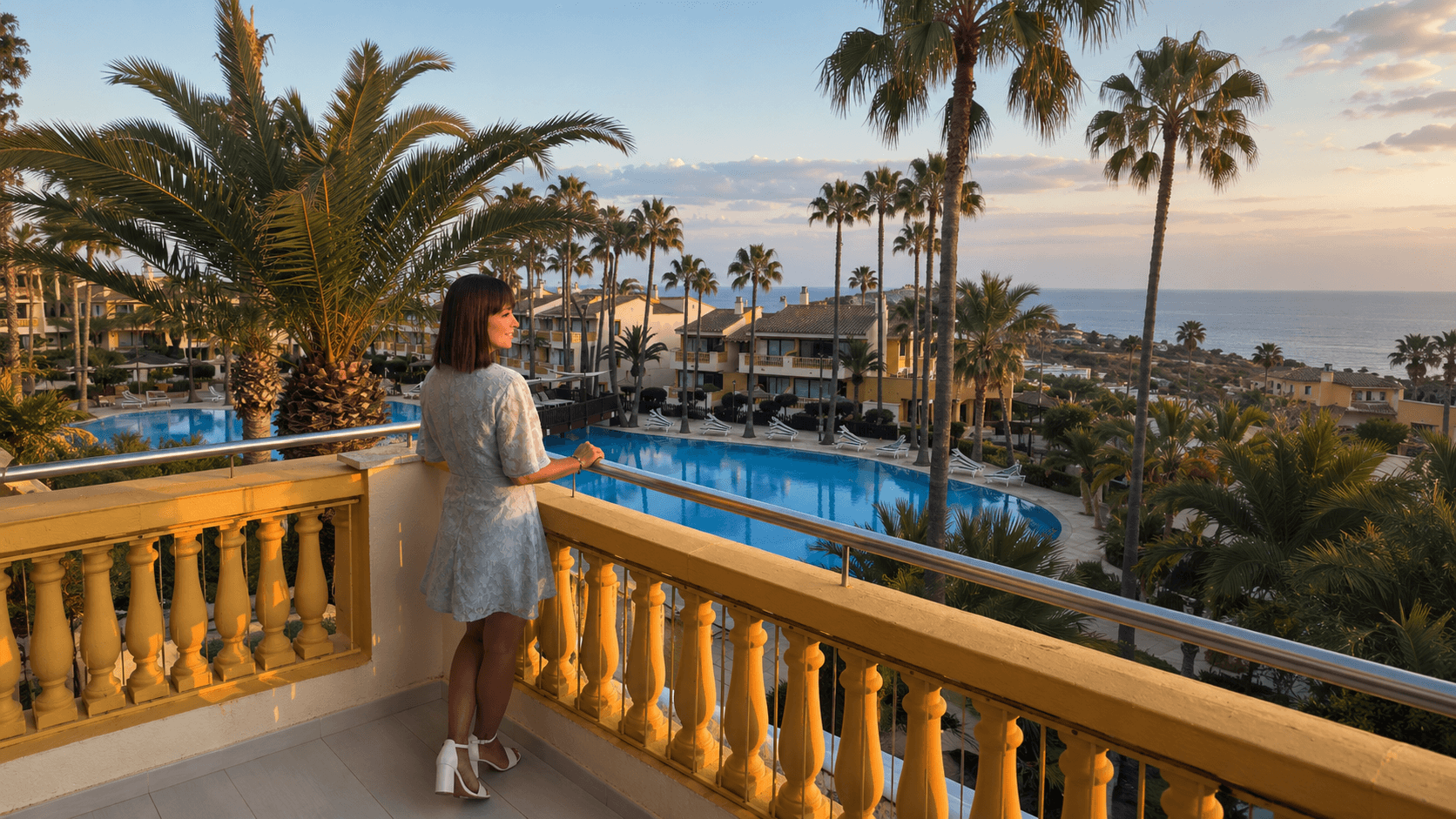
Buying real estate in Spain may seem very simple at first glance. Beautiful renderings, terraces overlooking the sea, gated communities with pools, sunshine, palm trees, and prices lower than in many major Western European cities.
But if you really want to make a good decision, it’s not enough to just browse online listings.
A Spanish property is more than just square meters, floor plans, and price. Just as important are the surroundings, accessibility, the developer’s track record, the handover schedule, the payment structure, legal certainty, the after-sales process, and whether the project truly fits the lifestyle the buyer is seeking.
That is precisely why I believe it is important to personally tour the selected projects with serious prospective buyers.
What does a Spanish project tour entail?
A project tour is not simply a real estate viewing. It’s not about rushing through a few apartments in a single day and then making a quick decision.
A good project tour begins with a preliminary screening.
First, we clarify exactly what the buyer is looking for:
- whether they’re looking for a home for personal use, a vacation home,
- long-term rental,
- a permanent residence, or
- an investment. It makes a difference whether someone is looking for a quieter residential complex with panoramic views or a location with strong rental potential, close to the beach, amenities, and an active international community.
Important questions include, for example:
- What is the construction schedule for the project?
- Is there a valid building permit?
- What is the expected payment schedule?
- What guarantees protect the buyer?
- What common area fees can be expected?
- What amenities will be available in the residential complex?
- Who is responsible for addressing defects after handover?
- Is there a local legal, financial, and property management infrastructure?
What are the added benefits of a personal site visit?
One of the biggest advantages of a personal site visit is that the buyer not only sees photos, floor plans, and price lists, but can also meet in person with representatives of the promoters and developers—and in many cases, even with the owners or management.
This makes a huge difference.
During a face-to-face meeting, it becomes much clearer who is behind the project, how they communicate, what answers they provide to technical questions, and how transparently they discuss the schedule, payment terms, warranties, and post-handover procedures.
On-site, you can also view model homes, sample apartments, and, in many cases, previous projects. This is particularly important for newly constructed properties, where the buyer is often not purchasing a finished apartment but is instead investing in a project still under construction.
In such cases, it’s not just about how attractive the renderings are, but also about the quality of the developer’s previous projects, how the materials, common areas, residential complexes, the facades, the landscaping, and the interior designs.
A personal site visit is thus not just a tour, but also a way to build trust and prepare for a decision.
Why Isn’t the Rendering Enough?
A significant portion of newly built Spanish projects are beautifully presented. Renderings, videos, and brochures are often truly spectacular. But in reality, a decision cannot be made based solely on images.
It’s only when you’re on site that you truly discover what the neighborhood is like, how noisy the road is, how far the beach actually is, how steep the terrain is, what the transportation options are, and whether there are shops, restaurants, schools, healthcare facilities, a golf course, or other important services.
For a property with an ocean view, for example, it matters whether the panorama is truly livable or only looks good from a certain angle. In the case of a residential complex with a pool, it matters how large the common area is, how many units share it, and what the maintenance costs are.
These are the details that often aren’t visible online but make a huge difference when making a purchase decision.
How much does a trip like this cost?
The cost of the trip naturally depends on the season, country of departure, booking date, type of accommodation, and the length of the trip.
When visiting a development on the Costa Blanca, you should typically expect the following costs:
- Airfare to Alicante
- Accommodation in the Benidorm, Finestrat, Altea, Calpe, La Nucía, Polop, or Torrevieja area
- Car rental or local transfer
- Meals
- Travel insurance
- Possible legal or financial consultation if you’re seriously considering a purchase
Why is it worth going with a professional guide?
The Spanish real estate market operates differently from the Hungarian one. The reservation processes, developer payment schedules, legal documents, taxes, and purchase-related costs are all different.
For newly built properties, for example, you must factor in not only the purchase price but also VAT, duty-like fees, and notary, land registry, and attorney fees. These must always be clarified in advance, as the final purchase cost can be significantly higher than the price listed in the ad.
With professional guidance, the buyer is not left to face the unfamiliar process alone. They have someone by their side who not only appreciates the property’s beauty but also ensures that the decision is sound from a business, legal, and long-term perspective.
When investing, you may not even need to travel there multiple times
Many people are not looking for Spanish real estate to live in, but rather as an investment, a vacation home, or for short- or medium-term rental purposes.
In this case, it is particularly important that during the site visit, we examine not only the property itself but also the entire operational infrastructure.
While on site, you can also get in touch with property management companies that can assist with managing the property after the purchase. This may include key management, cleaning, maintenance, guest reception, rental-related administrative tasks, and keeping the owner continuously informed.
This is important because if someone is buying as an investment, they may not necessarily want to travel to Spain again and again for every little matter. With a well-chosen project, a reliable local legal framework, and a suitable property management company, the process can become much more transparent and convenient.
Of course, property management terms, fees, services, and contractual details must always be clarified in advance. But a personal project tour helps the buyer gain a realistic view not only of the property itself but also of how things will work after the purchase.
Who should consider a personal project tour?
- Anyone who is seriously considering buying property in Spain.
- Anyone who doesn’t just want to look at pictures, but wants to understand the market.
- For those who want to compare different developers and locations.
- For those who don’t want to navigate the Spanish new-construction real estate market on their own.
- And for those who aren’t quite sure about their decision yet but want a clear picture of the options.
Costa Blanca project tour July 14–21
From July 14 to 21, I’ll be on the Costa Blanca, where I’ll be meeting with several developers, promoters, and project offices. My goal is to personally familiarize myself with projects that I can later recommend with confidence to Hungarian, German-speaking, and international prospective buyers.
The itinerary includes, among others, new-construction projects in Benidorm, Finestrat, La Nucía, Polop, Altea, and newly built projects in surrounding locations along the Costa Blanca.
If you’re seriously considering buying Spanish real estate and would like to see firsthand how a project tour works, join me.
This is not an organized tourist trip, nor is it a pre-packaged vacation. Everyone books their own travel and accommodations, and I provide professional guidance to ensure that the on-site project tour is truly useful, focused, and transparent.
When buying real estate in Spain, the most important decisions aren’t made based on photos, but right there on site.
That’s where we see the house, the neighborhood, the developer, the actual distances, and the full picture.